The eBooks we sell are sold as a single-user licence and are intended for the end user only.
The sale of some eBooks are restricted to certain countries. To alert you to such restrictions, please select the country of the billing address of your credit or debit card you wish to use for payment.
For further information see https://www.wildy.com/ebook-formats
Once the order is confirmed an e-mail will be sent to you to allow you to download the eBook. For UK purchases this will be automatic. For purchases outside the UK a member of staff will need to confirm the sale. (Staff are available to do this during normal business hours, Mon-Fri 8:30-17:00 UK time)
All eBooks are supplied firm sale and cannot be returned. If you believe there is a fault with your eBook then contact us on ebooks@wildy.com and we will help in resolving the issue. This does not affect your statutory rights.
Due to a technical issue some ebooks are not available to order.
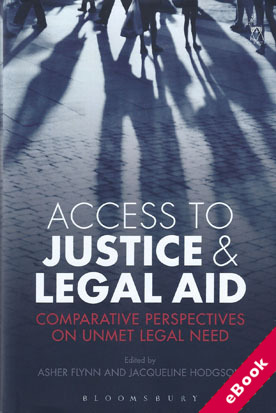
This book considers how access to justice is affected by restrictions to legal aid budgets and increasingly prescriptive service guidelines, which are a controversial and hotly contested part of the contemporary global legal landscape.
As common law jurisdictions, England and Wales, and Australia, share common ideals, policies and practices. Yet, they also differ in aspects of their legal and political culture, in the nature of the communities they serve, and in the approaches adopted by their respective judiciaries. They provide us with different perspectives on access to justice and how we might seek to overcome the crisis in unmet legal need.
The book fills an important gap in existing scholarship as the first to bring together new empirical and theoretical knowledge examining different justice responses to legal aid crises in these jurisdictions in both domestic and comparative contexts, across the realms of criminal, civil and family law.
It achieves this by examining the broader social, political, legal, health and welfare impacts of legal aid cuts and prescriptive service guidelines. It is essential reading for all those interested in access to justice and legal aid.