The eBooks we sell are sold as a single-user licence and are intended for the end user only.
The sale of some eBooks are restricted to certain countries. To alert you to such restrictions, please select the country of the billing address of your credit or debit card you wish to use for payment.
For further information see https://www.wildy.com/ebook-formats
Once the order is confirmed an e-mail will be sent to you to allow you to download the eBook. For UK purchases this will be automatic. For purchases outside the UK a member of staff will need to confirm the sale. (Staff are available to do this during normal business hours, Mon-Fri 8:30-17:00 UK time)
All eBooks are supplied firm sale and cannot be returned. If you believe there is a fault with your eBook then contact us on ebooks@wildy.com and we will help in resolving the issue. This does not affect your statutory rights.
Due to a technical issue some ebooks are not available to order.
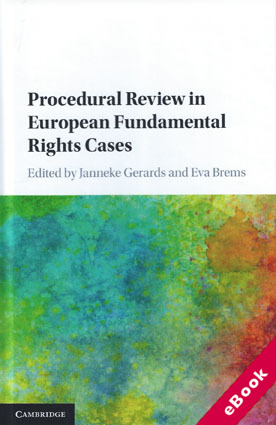
Traditionally, courts adjudicate fundamental rights cases by applying substantive tests of reasonableness or proportionality.
Increasingly, however, European courts are also expressly taking account of the quality of the procedure that has led up to a fundamental rights interference. Yet this procedural review is far from uncontroversial. There still is a lack of clarity as to what 'procedural review' really means, what its potential for judicial decision-making is, how it relates and should relate to substantive review, and what its limitations are.
Featuring contributions from experts in the field, this book is the first in-depth study into procedural review, considering the theoretical and conceptual issues at play, as well as the applicability of procedural review in different legal systems. It will therefore be of great importance to scholars and practitioners interested in fundamental rights adjudication in Europe, judicial reasoning and procedural justice.