The eBooks we sell are sold as a single-user licence and are intended for the end user only.
The sale of some eBooks are restricted to certain countries. To alert you to such restrictions, please select the country of the billing address of your credit or debit card you wish to use for payment.
For further information see https://www.wildy.com/ebook-formats
Once the order is confirmed an e-mail will be sent to you to allow you to download the eBook. For UK purchases this will be automatic. For purchases outside the UK a member of staff will need to confirm the sale. (Staff are available to do this during normal business hours, Mon-Fri 8:30-17:00 UK time)
All eBooks are supplied firm sale and cannot be returned. If you believe there is a fault with your eBook then contact us on ebooks@wildy.com and we will help in resolving the issue. This does not affect your statutory rights.
Due to a technical issue some ebooks are not available to order.
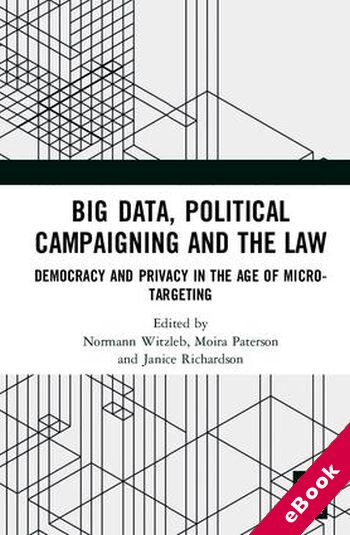
In this multidisciplinary book, experts from around the globe examine how data-driven political campaigning works, what challenges it poses for personal privacy and democracy, and how emerging practices should be regulated.
The rise of big data analytics in the political process has triggered official investigations in many countries around the world, and become the subject of broad and intense debate. Political parties increasingly rely on data analytics to profile the electorate and to target specific voter groups with individualised messages based on their demographic attributes. Political micro-targeting has become a major factor in modern campaigning, because of its potential to influence opinions, to mobilise supporters and to get out votes. The book explores the legal, philosophical and political dimensions of big data analytics in the electoral process. It demonstrates that the unregulated use of big personal data for political purposes not only infringes voters’ privacy rights, but also has the potential to jeopardise the future of the democratic process, and proposes reforms to address the key regulatory and ethical questions arising from the mining, use and storage of massive amounts of voter data.
Providing an interdisciplinary assessment of the use and regulation of big data in the political process, this book will appeal to scholars from law, political science, political philosophy, and media studies, policy makers and anyone who cares about democracy in the age of data-driven political campaigning.