The eBooks we sell are sold as a single-user licence and are intended for the end user only.
The sale of some eBooks are restricted to certain countries. To alert you to such restrictions, please select the country of the billing address of your credit or debit card you wish to use for payment.
For further information see https://www.wildy.com/ebook-formats
Once the order is confirmed an e-mail will be sent to you to allow you to download the eBook. For UK purchases this will be automatic. For purchases outside the UK a member of staff will need to confirm the sale. (Staff are available to do this during normal business hours, Mon-Fri 8:30-17:00 UK time)
All eBooks are supplied firm sale and cannot be returned. If you believe there is a fault with your eBook then contact us on ebooks@wildy.com and we will help in resolving the issue. This does not affect your statutory rights.
Due to a technical issue some ebooks are not available to order.
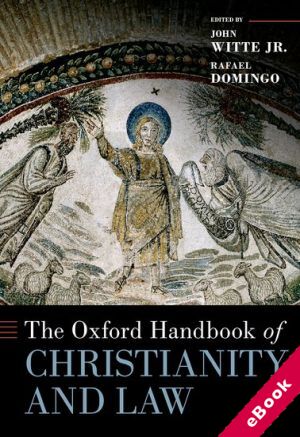
This volume tells the story of the interaction between Christianity and law-historically and today, in the traditional heartlands of Christianity and around the globe. Sixty new chapters by leading scholars provide authoritative and accessible accounts of foundational Christian teachings on law and legal thought over the past two millennia; the current interaction and contestation of law and Christianity on all continents; how Christianity shaped and was shaped by core public, private, penal, and procedural laws; various old and new forms of Christian canon law, natural law theory, and religious freedom norms; Christian teachings on fundamental principles of law and legal order; and Christian contributions to controversial legal issues. Together, the chapters make clear that Christianity and law have had a perennial and permanent influence on each other over time and across cultures, albeit with varying levels of intensity and effectiveness.
This volume defines "Christianity" broadly to include Catholic, Protestant, and Orthodox traditions and various denominations and schools of thought within them. It draws on Christian ideas and institutions, norms and practices, texts and titans to tell the story of Christianity's engagement with the world of law over the past two millennia. The volume also defines "law" broadly as the normative order of justice, power, and freedom. The chapters address natural laws of conscience, reason, and the Bible and positive laws enacted by states, churches, and voluntary associations. Several chapters focus on Christian engagement with specific types of law: canon law, family law, education law, constitutional law, criminal law, procedural law, and laws governing labor, tax, contracts, torts, property, and beyond. Other chapters take up cutting edge legal issues of racial justice, environmental care, migration, euthanasia, and (bio)technology as well as fundamental legal principles of liberty, dignity, equality, justice, equity, judgment, and solidarity.